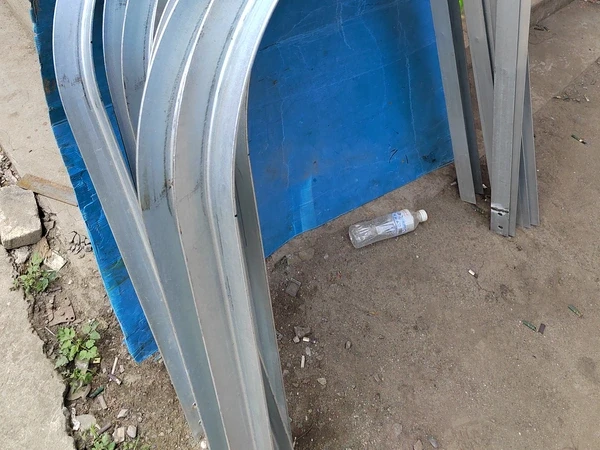
What Is Oil & Gas Ladders | Explosion-Proof Access for Refineries & Platforms?
Oil and gas facilities demand ladders that withstand extreme conditions: salt spray on offshore platforms, hydrogen sulfide exposure in refineries, Arctic temperatures in northern fields, and desert heat in Middle Eastern installations.
Material selection, coating specification, and compliance documentation are critical — a ladder failure in an oil and gas environment is not just a maintenance issue, it is a safety incident with regulatory consequences.
Why Oil & Gas Ladders | Explosion-Proof Access for Refineries & Platforms Matters
Oil and gas environments combine multiple aggressive factors — corrosion, temperature extremes, safety regulations, and remote locations where replacement is logistically difficult. Specifying the right ladder the first time avoids million-dollar retrofit projects.
Hu2082S & Sour Service Corrosion
Hydrogen sulfide (Hu2082S) exposure causes sulfide stress cracking in standard carbon steels. Refineries and gas processing facilities in sour service regions require SS316 or specially coated HDG with NACE MR0175 compliance for Hu2082S environments.
Read: Hu2082S-Resistant Material Selection →Offshore Salt Spray & Chloride Attack
Offshore platforms face continuous salt spray with chloride deposition rates 10-50x higher than coastal onshore sites. SS316 is the minimum standard u2014 SS304 will develop pitting within 12-18 months in splash zone applications.
Read: Offshore Platform Material Specification →ATEX / IECEx Explosion Protection Zones
In classified EX zones, aluminum ladders are prohibited due to spark risk from tool impact. Only steel (HDG or SS) is permitted. All fasteners and accessories must also meet the zone classification u2014 no exceptions.
Read: EX Zone Ladder Compliance Requirements →Remote Location Logistics
Offshore platforms and remote desert installations have no hardware store nearby. Every bracket, bolt, and spare part must be on the manifest. Dengtai provides comprehensive BOM (bill of materials) packages and on-site supervision for remote projects.
Read: Remote Site Installation Planning →How to Choose the Right Oil & Gas Ladders | Explosion-Proof Access for Refineries & Platforms
Oil and gas ladder specification follows a strict hierarchy: safety classification first, then material selection for the specific operating environment, then structural requirements. Here is the decision sequence.
1. Determine EX Zone Classification
Is the ladder location in a classified hazardous area? Zone 0/1/2 (gas) or Zone 20/21/22 (dust)? This determines whether aluminum is prohibited and whether additional bonding/grounding is required. Consult your facility HAC (Hazardous Area Classification) drawing.
Read: Hazardous Area Compliance Guide →2. Select Material for Operating Environment
Offshore splash zone: SS316 only. Onshore refinery (non-Hu2082S): HDG. Sour service (Hu2082S present): SS316 per NACE MR0175. Arctic: low-temperature rated carbon steel (impact tested to -45u00b0C) with HDG. Desert: HDG with UV-stable topcoat.
Read: Material Selection Matrix →3. Verify Structural Load Requirements
Oil and gas platforms often require higher load ratings: 200-250 kg concentrated load vs standard 150 kg. Wind loads on offshore structures follow API RP 2A or ISO 19902 rather than building codes. Dengtai provides structural calculations for all offshore projects.
Read: Offshore Structural Load Guide →4. Confirm Inspection & Maintenance Regime
Offshore installations typically follow a 6-month inspection cycle per classification society rules (DNV, ABS, Lloyd's). Specify quick-release cage panels and corrosion monitoring coupons for simplified inspection.
Read: Ladder Inspection Checklist →Recommended Products
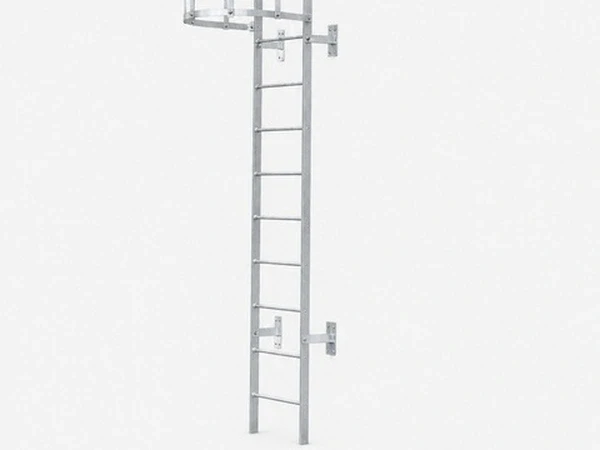
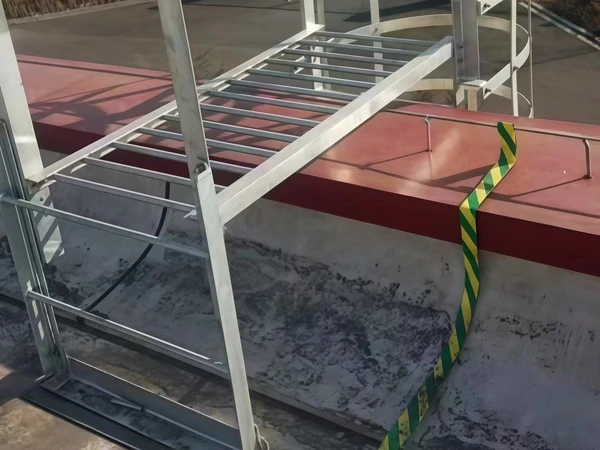
Real Projects, Real Results
Petronas RAPID Refinery, Malaysia (2022) u2014 28 SS316 Caged Ladders
28 SS316 caged ladders for the RAPID refinery complex in Johor. Sour service environment required full NACE MR0175 material traceability. All welds radiographed, all materials with mill certificates. Completed on schedule despite COVID supply chain constraints.
Read Full Case Study →Frequently Asked Questions
Need a Custom Solution?
Describe your requirements and receive an engineering-reviewed quotation within 24 hours.