What Is Industrial Facility Ladders | Heavy-Duty Access for Factories & Warehouses?
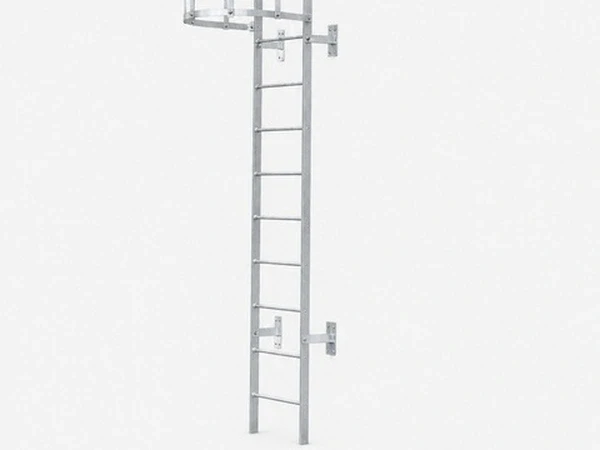
Industrial facility ladders provide permanent vertical access in manufacturing plants, factories, warehouses, and logistics centers. Unlike commercial building ladders, these face daily use by multiple workers, potential forklift impact, exposure to manufacturing byproducts, and higher load requirements.
Industrial applications demand robust construction: reinforced stringers, deeper rung profiles, heavier-duty wall brackets, and coatings that withstand chemical exposure, vibration, and temperature cycling.
Why Industrial Facility Ladders | Heavy-Duty Access for Factories & Warehouses Matters
Industrial facilities present the toughest environment for fixed access ladders. Continuous operation cycles, forklift traffic, vibration from heavy machinery, and exposure to manufacturing byproducts all stress ladder structures. These are the four most critical challenges.
Forklift & Vehicle Impact Risk
Ladders positioned near forklift aisles or truck bays face collision risk. Standard wall brackets may fail after a single impact. Heavy-duty brackets, bollard protection, and strategic placement are essential.
Read: Industrial Ladder Placement & Protection Guide →Vibration Fatigue from Machinery
Continuous vibration from nearby compressors, stamping presses, or conveyor systems causes bolt loosening and weld fatigue over time. Industrial ladders need periodic torque checks and may require vibration-dampened bracket mounts.
Read: Vibration-Resistant Ladder Installation →Chemical & Particulate Exposure
Metal finishing shops, chemical storage areas, and food processing plants expose ladders to corrosive agents. Standard HDG may degrade within 3-5 years in aggressive environments u2014 SS304 or SS316 upgrade may be required.
Read: Corrosion Protection for Industrial Environments →High-Traffic Wear & Tear
A ladder serving 50+ workers per shift accumulates more wear in one year than a commercial ladder sees in a decade. Rung surfaces, cage hoops, and platform gratings need durable anti-slip treatments rated for continuous use.
Read: High-Traffic Ladder Specification Guide →How to Choose the Right Industrial Facility Ladders | Heavy-Duty Access for Factories & Warehouses
Selecting industrial facility ladders requires balancing four factors: traffic volume, environmental exposure, load requirements, and maintenance access. Here is a structured framework.
1. Assess Traffic Volume & Load
Light traffic (<20 users/day): standard 600mm width. Heavy traffic (50+ users/day): 700mm width with reinforced rungs. For facilities where workers carry tools: deeper 150mm rung depth for improved footing.
Read: OSHA Fixed Ladder Requirements →2. Match Material to Environment
Indoor dry: HDG standard. Indoor with chemical exposure: SS304. Food/beverage processing: SS304 or SS316 with sanitary finish. Outdoor with de-icing salts: SS316. Refer to our material selection matrix for detailed guidance.
Read: HDG vs SS304 vs SS316 Selection Guide →3. Plan for Maintenance Access
Industrial ladders serving equipment platforms need clearance for maintenance personnel with tool belts. Consider rest platforms every 6-9m for tall installations and self-closing safety gates at all landing points.
Read: Installation & Maintenance Planning →4. Verify Local Code Requirements
OSHA 1910.23 governs US industrial facilities. Additional requirements may apply from local fire codes, insurance underwriters, and corporate safety standards. Always verify with your AHJ before specifying.
Read: OSHA 1910.23 Compliance Guide →Recommended Products
Real Projects, Real Results
Foxconn Shenzhen u2014 42 HDG Caged Ladders for Electronics Manufacturing Campus
42 HDG caged ladders installed across 8 factory buildings. Challenge: tight installation windows during production line changeovers. All ladders pre-fabricated offsite, installed in 48-hour windows per building.
Read Full Case Study →Frequently Asked Questions
Need a Custom Solution?
Describe your requirements and receive an engineering-reviewed quotation within 24 hours.