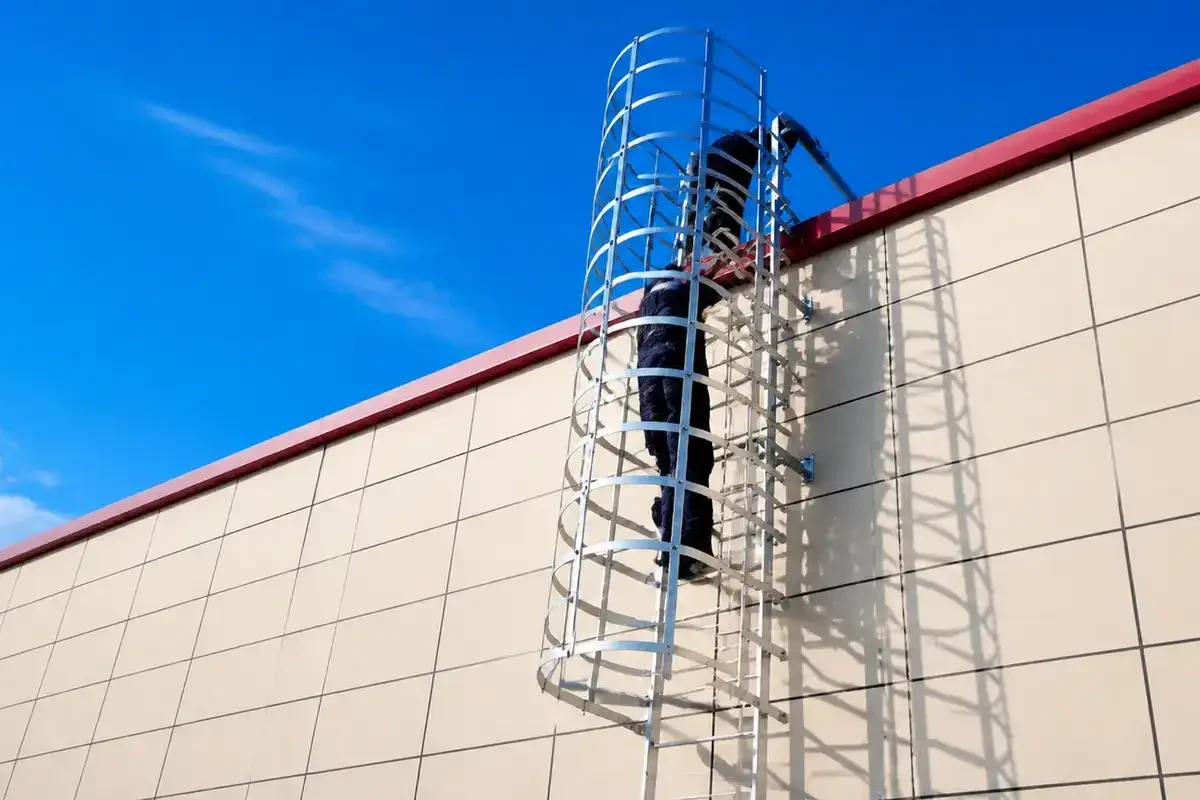
Dengtai is committed to environmentally responsible manufacturing. Steel is the world’s most recycled material — and we ensure our products contribute to the circular economy while minimizing waste and emissions in our own operations.
Steel: The Ultimate Circular Material
Steel is 100% recyclable — infinitely, without loss of quality. Every Dengtai ladder, at the end of its service life (15-50+ years), can be fully recycled into new steel products. The steel in today’s ladder was likely part of a building, bridge, or vehicle decades ago — and will be again decades from now.
| Material | Recyclability | Recycled Content (Typical) |
|---|---|---|
| Carbon steel (Q235B, Q345B) | 100% | 60-80% recycled content |
| Stainless steel (SS304, SS316) | 100% | 60-85% recycled content |
| Zinc (HDG coating) | 100% | 30-40% recycled content |
Our Manufacturing Practices
Material Efficiency
- Nesting software optimizes steel plate cutting to minimize offcut waste
- Steel offcuts are segregated by grade and returned to the steel mill for recycling
- Zero steel waste to landfill
Surface Treatment
- Hot-dip galvanizing: zinc bath chemistry is monitored and maintained; zinc dross (skimmings) is recycled by the zinc supplier
- Stainless steel passivation: nitric acid solutions are neutralized before disposal per environmental regulations
- No hexavalent chromium used in any surface treatment process
Packaging
- VCI (Volatile Corrosion Inhibitor) film is recyclable polyethylene-based
- Wooden pallets are ISPM 15 heat-treated (not chemically fumigated)
- Packaging materials are minimized to what is necessary for cargo protection during ocean freight
Product Longevity = Sustainability
The most environmentally sustainable ladder is the one that lasts the longest. A ladder that serves 50+ years (SS316) avoids the environmental cost of manufacturing, transporting, installing, and eventually disposing of multiple replacement ladders over the same period.
Our material selection guidance always considers lifecycle cost — and lifecycle environmental impact — not just initial purchase price.
Continuous Improvement
Dengtai is ISO 9001:2015 certified. We continuously review our processes for opportunities to reduce waste, improve material efficiency, and minimize environmental impact. While we are not yet ISO 14001 (Environmental Management) certified, we operate with its principles in mind and target certification as our business grows.
Steel vs Other Materials: Environmental Comparison
Steel vs FRP (Fiber-Reinforced Plastic) Ladders
FRP (fiberglass) ladders are sometimes marketed as “green” alternatives, but their environmental profile is more complex than it appears:
| Factor | Steel Ladder | FRP Ladder |
|---|---|---|
| Raw material source | Iron ore (abundant) + recycled steel (60-80%) | Petroleum-derived resins + glass fiber |
| Manufacturing energy | ~20 GJ/tonne (EAF with recycled feedstock) | ~50-100 GJ/tonne (polymer + fiber production) |
| End-of-life | 100% recyclable, infinite cycles | Not recyclable — landfill or incineration |
| Service life | 15-50+ years (material-dependent) | 15-25 years (UV degradation limits lifespan) |
| Toxic emissions (fire) | None (steel does not burn) | Toxic smoke (styrene, VOCs) when burned |
Steel is the environmentally superior choice for industrial access ladders when considering full lifecycle impact.
Steel vs Aluminum: Recycled Content Analysis
While both steel and aluminum are highly recyclable:
- Steel: 60-80% recycled content is standard in structural grades (Q235B, Q345B). Magnetic properties make steel easy to separate from construction and demolition waste streams.
- Aluminum: Primary aluminum production requires approximately 15 MWh per tonne for smelting. Secondary (recycled) aluminum uses only ~5% of that energy, but aluminum in construction products often has lower recycled content because aerospace and automotive recycling streams are prioritized for higher-value applications.
FAQ
Q: Is hot-dip galvanizing environmentally harmful?
Hot-dip galvanizing uses zinc, a naturally occurring element. The process operates in a closed loop — zinc not consumed in the coating remains in the bath for the next batch. Zinc dross (skimmings) is recycled by the zinc supplier. Modern HDG plants operate under strict environmental permits. The long service life of galvanized steel (25-50+ years) means far less frequent replacement and lower lifecycle environmental impact than shorter-lived alternative materials.
Q: Are Dengtai’s ladders compliant with green building standards (LEED, BREEAM)?
Dengtai ladders can contribute to green building certification credits: (1) Recycled Content — our steel contains 60-80% recycled content, contributing to LEED MR Credit 4; (2) Regional Materials — our Shijiazhuang factory means materials sourced and manufactured within regional proximity to Tianjin port for export; (3) Durability — extended service life contributes to whole-building lifecycle assessment credits. Contact our team for specific documentation to support your certification application.
Q: What happens to old steel ladders at end of life?
Steel ladders can be fully recycled at any scrap metal facility. The steel is melted in an electric arc furnace and re-formed into new products. The zinc coating on HDG ladders is also recovered — zinc volatilizes during melting, is captured in furnace dust, and recycled by specialized zinc recyclers. Nothing goes to landfill.
Q: Does Dengtai provide carbon footprint data for your products?
We can provide material-origin statements and manufacturing process descriptions to support your carbon accounting. At present, we do not publish product-specific Environmental Product Declarations (EPDs). If your project requires EPD documentation, contact our engineering team to discuss feasibility.
Environmental Inquiries
For questions about our environmental practices, material sourcing, or product recyclability:
Email: sales@dtsteelladder.com
Request a Quote → | About Dengtai → | Galvanized Steel Ladders → | Stainless Steel Ladders → | Our Manufacturing →
</script>
Not sure which solution fits your project?
Describe your facility and requirements — our engineers will match you to the right industry solution.
Talk to an Engineer →