What Is Roof Access Ladders | Complete Guide for Industrial & Commercial Buildings?
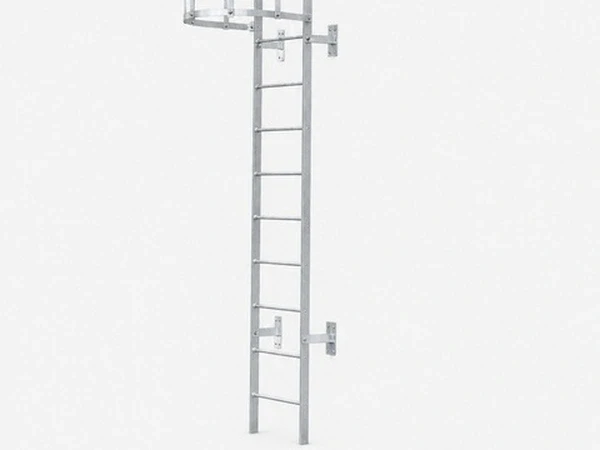
A roof access ladder is a permanent, fixed vertical ladder that provides safe passage from ground level or an intermediate landing to a building's rooftop. Used across commercial offices, industrial plants, water treatment facilities, and data centers, these ladders serve HVAC maintenance crews, facade cleaning teams, and emergency responders.
Unlike temporary ladders, a roof access ladder is a structural installation — anchored to the building wall, engineered for wind loads, and equipped with safety cages, parapet hooks, or self-closing gates depending on local code requirements.
Why Roof Access Ladders | Complete Guide for Industrial & Commercial Buildings Matters
Roof access ladders face unique engineering challenges that standard industrial ladders don't. Getting the specification wrong leads to water damage, safety violations, or expensive retrofits. These are the four most common pain points our clients face — and the articles that help you solve each one.
Waterproofing at Bracket Penetrations
Every bracket anchor point through the building envelope is a potential leak. Cavity walls, rainscreen facades, and insulated metal panels each need different waterproofing details.
Read: Waterproofing Guide for Ladder Bracket Penetrations →Wind Loading on Tall Buildings
A ladder at ground level faces ~0.85 kN/mu00b2 wind pressure. The same ladder on a 40-story building faces 3-5x that. Standard brackets may fail if wind load calculations are skipped.
Read: ASCE 7 & EN 1991-1-4 Wind Load Calculation Guide →Multiple Regulatory Thresholds
The height requiring a safety cage varies: 2.5m (BS 4211 UK), 3m (EN ISO 14122-4 EU), 4m (AS 1657 AU), 7.3m (OSHA US). A multinational project must navigate all four.
Read: Roof Access Ladder Regulations u2014 OSHA vs EN vs BS vs AS →Architectural Visibility
A galvanized industrial ladder on a glass office tower draws complaints. SS304 with brushed finish reads as intentional design, while RAL-matched architectural paint over HDG balances aesthetics and budget.
Read: SS304 vs HDG vs SS316 u2014 Material & Finish Selection Guide →How to Choose the Right Roof Access Ladders | Complete Guide for Industrial & Commercial Buildings
Selecting the right roof access ladder depends on four key factors: building height, local code requirements, environmental exposure, and architectural constraints. Below is a structured decision framework with links to detailed guides for each factor.
1. Determine Your Configuration Type
Through-ladder (parapet mount), side-step (roof edge), hatch access (interior), or walk-through extension. Each has different OSHA/EN requirements.
Read: Through-Ladder vs Side-Step vs Hatch u2014 Configuration Guide →2. Check What Standard Applies to Your Location
OSHA 1910.23 (US), EN ISO 14122-4 (EU), BS 4211 (UK), AS 1657 (AU/NZ). Each standard dictates cage requirements, top extension height, rung spacing, and load rating.
Read: Complete Regulatory Comparison Table →3. Select Material Based on Environment
HDG (standard industrial, inland), SS304 (architectural, visible facades), SS316 (coastal <5km, chemical exposure). Match the material to the corrosion risk.
Read: Material Selection Guide with Cost Comparison →4. Verify Structural and Wind Load Requirements
For buildings over 20 stories, wind load calculations per ASCE 7 or EN 1991-1-4 are essential. Bracket spacing and section dimensions may need adjustment.
Read: Wind Load Calculation Step-by-Step →Recommended Products
Real Projects, Real Results
CapitaLand Marina Bay, Singapore (2023) u2014 16 SS304 Caged Ladders + 72m Walkways
Premium waterfront development required architecturally integrated roof access. Dengtai supplied 16 brushed SS304 caged ladders with anti-fingerprint passivation and 72m of connecting walkways. Zero corrosion after two years in Singapore's marine environment.
Read Full Case Study →Frequently Asked Questions
Need a Roof Access Ladder for Your Building?
Describe your requirements and receive an engineering-reviewed quotation within 24 hours.